TikTok Hook Types That Improve Retention
The first 1–3 seconds of your TikTok determine whether most people stay or swipe. Here are the four main hook types, when to use each, and how to find out which works best for your account.
- How to find winning patterns on TikTok Hub
- Best TikTok metrics to track for growth
- What is a good completion rate on TikTok?
- TikTok hook types that improve retention
Your hook is the only part of your video everyone sees.
Everything after the first 1–3 seconds is only watched by people who stayed. And on TikTok, “staying” is an active decision — the swipe is one thumb movement away, and most people make that decision almost instantly.
This means your hook doesn’t just affect your completion rate.
It determines what percentage of your total potential audience actually exists.
Why hooks matter more on TikTok than anywhere else
TikTok’s For You Page serves content to people who have no prior relationship with the creator. They’re not subscribers. They didn’t search for you. The algorithm put you in front of them and the video has about two seconds to justify being there.
Compare this to YouTube, where someone clicks on a video they chose. Or Instagram, where they follow you. TikTok is a cold audience by default. Your hook is the pitch to a room full of strangers.
A good hook doesn’t need to be flashy.
It needs to create one of two things: an information gap (I need to know how this ends) or immediate recognition (this is exactly what I think about).
The four main hook types
1. Question hook
Opens with a question the viewer wants answered.
- “Why do most creators never find their winning format?”
- “What’s actually killing your TikTok completion rate?”
- “Have you ever posted a video and watched it go nowhere?”
Questions create information gaps. The viewer’s brain immediately starts formulating an answer, which gives them a reason to keep watching — to see if their answer matches yours, or to get the one they don’t have.
Works best for educational content, opinion pieces, anything where you’re challenging an assumption or revealing something non-obvious.
The trap is going too broad. “Are you making mistakes?” has no grip — it could apply to anyone. The question needs to feel like it was written for exactly the person watching.
2. Statement hook
Opens with a direct, often contrarian claim.
- “Posting more often is hurting your growth.”
- “The TikTok metric everyone tracks is the wrong one.”
- “Most advice about content planning is backwards.”
Contrarian statements trigger mild disagreement or intense curiosity — both of which make people watch to hear the argument. Even viewers who disagree want to see why you’d say that.
Works best for opinion-led content, myth-busting, “unpopular take” formats.
Especially effective when the statement captures something the viewer already feels but hasn’t heard said directly.
The risk: if the claim is too extreme or feels like bait, viewers feel misled and drop off early. The statement has to be something you can actually defend.
3. Story hook
Opens in the middle of a narrative — usually a situation with tension or stakes.
- “Last Tuesday I posted a video that flopped in the first hour. Then something unexpected happened.”
- “I almost deleted my account three months ago. Here’s what changed.”
- “This time last year I was posting three times a week and getting zero traction.”
Stories have built-in structure — a setup that implies a resolution. Starting in the middle creates tension immediately, because the viewer is dropped into a situation that clearly isn’t over yet.
Works best for personal experience content, transformation stories, behind-the-scenes. The common mistake is starting too slowly. “So I was thinking the other day about how…” kills the tension before it builds. The opening line has to imply stakes immediately.
4. List hook
Opens by stating a specific number of things the video will cover.
- “Three things every TikTok creator should track every week.”
- “Five metrics that predict whether your content will grow your account.”
- “Here are the four hook types that improve retention — and when to use each.”
Lists set expectations. The viewer knows the structure, the length, and roughly what they’ll get. That predictability reduces friction — there’s a clear endpoint and clear value upfront.
Works best for tutorial content, frameworks, “things you should know” formats. Educational creators tend to do well with this because the format signals efficiency.
The trap: lists with vague items (“number four is about mindset”) feel like padding and lose viewers in the middle. Each item needs to earn its slot.
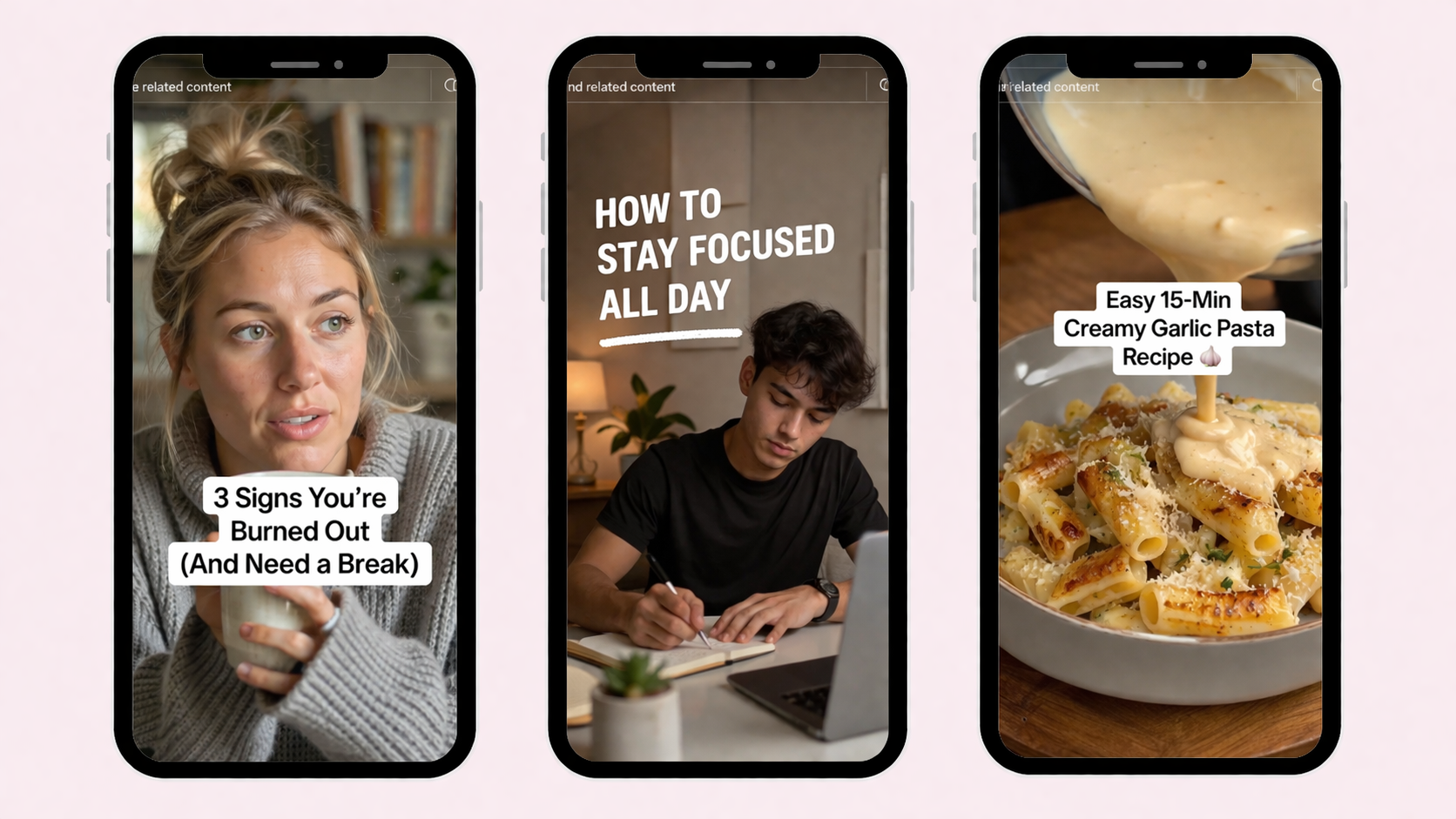
How to find out which hook works best for your account
The answer isn’t in this article — it’s in your data.
Every account has a hook type that consistently outperforms. For some creators, question hooks drive 2× the completion rate of statement hooks. For others, story hooks convert the best. The pattern only becomes visible when you’ve tracked enough videos to sort by performance.
Here’s the process:
- Categorize every video’s hook type as you log it (question / statement / story / list)
- After 20–30 videos, sort your log by completion rate
- Look at the top 25% — which hook type appears most?
That’s your default hook. Not forever, and not exclusively — but it’s the starting point your next 10 videos should use.
→ For the full tracking system: How to find winning patterns on TikTok
→ For what happens after the hook: What is a good completion rate on TikTok?
This TikTok content planner spreadsheet includes a hook tracker built into the video log — categorize each video’s hook type as you go, and the dashboard shows you which type drives the highest completion rates for your account.
People also ask
What is the best hook for TikTok?
There’s no universal best hook — it depends on your content category and audience. Question hooks generally work well for educational and analysis content. Story hooks work well for personal and experience-led content. The best hook for your account is the one that consistently produces the highest completion rates in your own data, which is only visible after tracking 20–30 videos across different hook types.
How long should a TikTok hook be?
1–3 seconds. The hook is the first line or first visual — not an extended intro. By the 3-second mark, a viewer has already decided whether they’re staying. The hook should be complete within that window, not building toward something.
What makes a hook “good” on TikTok?
A good hook creates either an information gap (a question the viewer wants answered) or immediate recognition (a statement that exactly captures something they already think or experience). Both create a reason to keep watching. A hook that’s vague, slow, or doesn’t establish stakes in the first two seconds will lose most of its audience before the actual content starts.
Can I use the same hook style every time?
No — variety prevents fatigue, and different hook types work better for different content formats. What you should do is identify which hook type performs best for your account, use it as your default for key uploads, and deliberately test the others as experiments. Track the results. Let the data tell you when to use each.
From this article
Content Creators
TikTok Content Planner & Analytics Tracker
Plan, track, and grow on TikTok with one structured system — content calendar, analytics tracker, hook bank, and winning content analyzer in a single Excel spreadsheet.